Twenty million people in Uttar Pradesh die in a heat wave in the opening of Kim Stanley Robinson’s anti-dystopian novel, The Ministry for the Future. Seventy-two thousand died in the 2003 European heat wave, so perhaps this extrapolation of climate trends is not entirely implausible. Conventional climate narratives hold that CO₂ released by burning fossil carbon is to blame. But that’s only half the story.
In his groundbreaking new book, Restore the Rain, geographer Alpha Lo tells the hidden history of water vapor and why, despite its potency as a greenhouse gas and its role in human-induced climate change, it has been largely ignored in popular narratives.
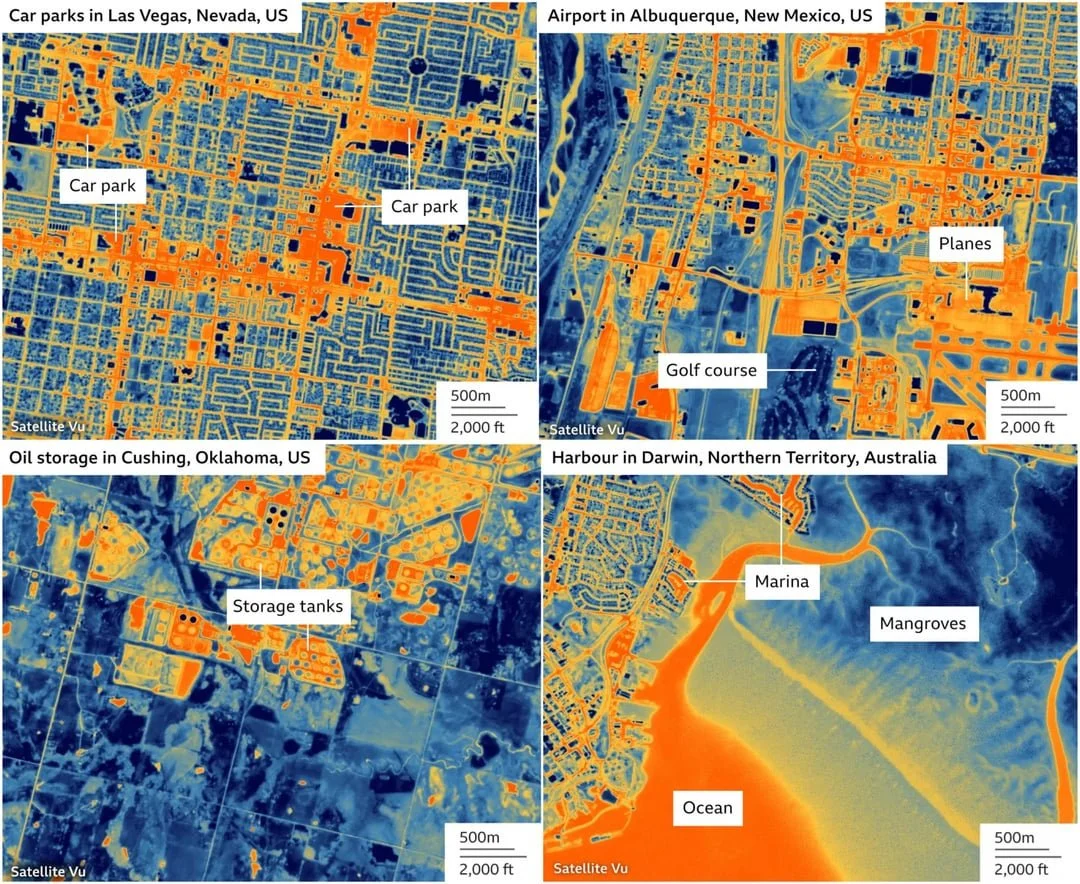
As it were, many of our most ubiquitous land-use practices—paving a parking lot, tilling a field, or logging a forest—leave the land much hotter than it was in its primeval state. This heat signature drives water vapor away, both through evaporation and through the tendency of waterlogged soils to oxidize, volatilize, and effectively disappear when exposed to the unforgiving rays of a sun unimpeded by the grace of shade.
In aggregate, this is what drives the catastrophic flood–fire–drought cycle.
Without the soil sponge, hard, compacted ground becomes increasingly impenetrable to rain. When the dry season arrives, the landscape has not banked healthy reserves of groundwater, and the entire region slips into drought. When the rains return, water sheets off the landscape all at once: the flood.
Without groundwater reserves, vegetation becomes dry and flammable, becoming increasingly vulnerable to catastrophic wildfire. Those fires scorch and degrade the soil, rendering it even less absorptive of rain and leading once again to drought. Thus, a vicious cycle is born.
The fascinating layer of this story, chronicled in Alpha’s book, is how this cycle can lead to the loss of rainfall itself—and how a global movement is emerging to recognize and act upon this connection.
So why has water vapor been largely left out of the conversation?
Well, you’ll have to read the book to get the full story. But the condensed version is that land-use practices are a lot harder to change than simply selling solar panels. Avoiding hard truths may work for a while, but sooner or later, the bright, glaring truth of the matter must be confronted. The structural liabilities have matured.
Enter stage left: the heat tax.
Remote sensing of heat signatures could become the smoking gun of land-use malfeasance. Modern satellites have a remarkable ability to measure land-surface temperatures. Ecoforestry, regenerative agriculture, and sponge-city development—everything our planet and our economies are begging for—leave measurable thermal signatures.
Taxing that heat and using the proceeds to subsidize regenerative land management could be the incentive architecture we’ve been waiting for.
The good news is that, unlike carbon centric climate science, which can be less palpable and therefore attracts skeptics, a heat tax would be grounded in something almost impossible to argue with: the sweltering heat radiating off a parking lot while a nearby forest remains comparatively cool.
Some will argue that a heat tax could be regressive, disproportionately affecting poor communities. And it is true that poorer neighborhoods are often hotter, less vegetated, and more vulnerable to heat-related health problems.
But that is a grossly oversimplified analysis.
A deeper analysis might reveal that many people in these neighborhoods are renters, while the absentee landlords who own the properties are the ones who could be incentivized to undertake regenerative improvements. The tax, in other words, could be structured not simply as a burden on residents, but as an incentive for property owners to invest in shade, vegetation, permeable surfaces, soil restoration, and water retention.
If we extend heat taxation into rural economies—across farms and forestlands—we quickly see how massive corporate conglomerates have liquidated the common good of the soil sponge in the pursuit of private and shareholder profit.
Redesigning land taxation to account for this despoliation could unleash a massive regenerative economic boom for we commoners.
And if we trace the history of government-funded environmental employment programs back to the Works Progress Administration and the Dust Bowl catastrophe, our contemporary landscapes of drought, flood, and fire may once again call for a massive, government-backed Jobs for the Environment initiative.
The heat tax might just be the key to unlocking the vault that replaces the extractive economy with a regenerative economy.